France did all their scoring before half-time, then held on through a second-half siege to beat South Africa 21-19 in Paris on Friday. The Nations Championship victory ended a five-match losing run against the Springboks and strengthened Les Bleus’ push for the inaugural final.
The margin came down to a missed conversion and one last defensive intervention. After Malcolm Marx’s try brought South Africa within two points, Manie Libbok missed the kick that would have levelled the match. Louis Bielle-Biarrey then forced the ball loose with a late tackle, with Antoine Dupont gathering possession to help close out the win.
Three first-half tries, then a different test
The French federation’s official match record confirms a 21-7 half-time lead. Aaron Grandidier-Nkanang, Theo Attissogbe and Bielle-Biarrey scored France’s tries, with Maxime Lucu converting all three. Jan-Hendrik Wessels supplied South Africa’s first-half try.
France added nothing after the interval. Instead, the game turned towards South Africa’s scrum and maul, with Cobus Reinach and Marx crossing to make the closing minutes uncomfortable for the hosts.
Jasper Wiese received a 20-minute red card early in the second half. France also lost players to yellow cards, including Grandidier-Nkanang and replacement prop Regis Montagne. The result was a test of defensive discipline and recovery rather than a continuation of France’s early attacking fluency.
Dupont’s shirt number did not tell the whole story
France named Dupont in the number 10 jersey amid injuries at fly-half, but BBC Sport’s match report describes him operating mainly in his familiar scrum-half role, with Lucu handling much of the work outside him.
Dupont’s kicking helped France gain territory and create Bielle-Biarrey’s try. His late work around the ball mattered just as much as the hosts protected a lead that had looked far safer at half-time.
Speaking to TF1 after the match, in comments reported by AFP, Dupont said: “It shows the mentality of the team that never gave in, even if we had it hard on our line.”
What the result changes
France’s win improves their position at the top of the northern hemisphere standings, but it is not confirmation of a place in the final. South Africa’s defeat damages their own challenge without, by itself, settling the southern hemisphere race.
The next fixtures bring another demanding round: France face Argentina and South Africa travel to Ireland on November 21, according to BBC Sport. For France, the immediate gain is a win over the world champions earned in two very different ways: three converted tries before the break, followed by enough resistance to keep the Springboks out at the end.
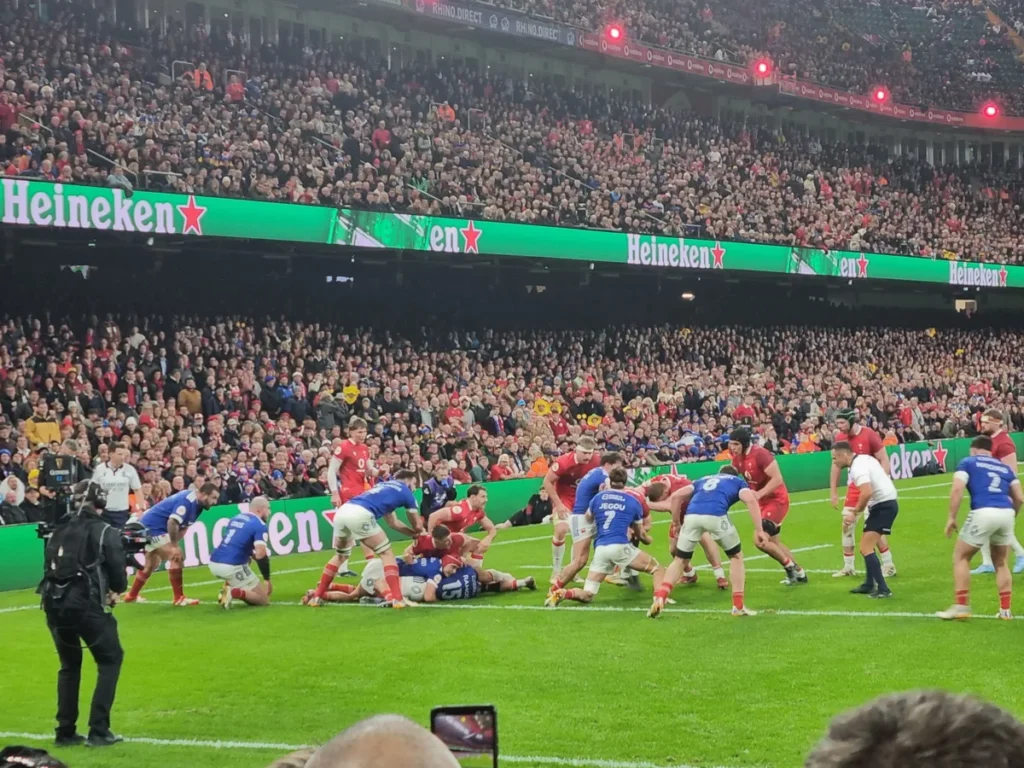
Archive photo: France in blue against Wales during the Six Nations on February 15, 2026, not the November South Africa match. Photo: Bearas, Wikimedia Commons, CC BY-SA 4.0. Resized and compressed to WebP; adapted image shared under the same license.