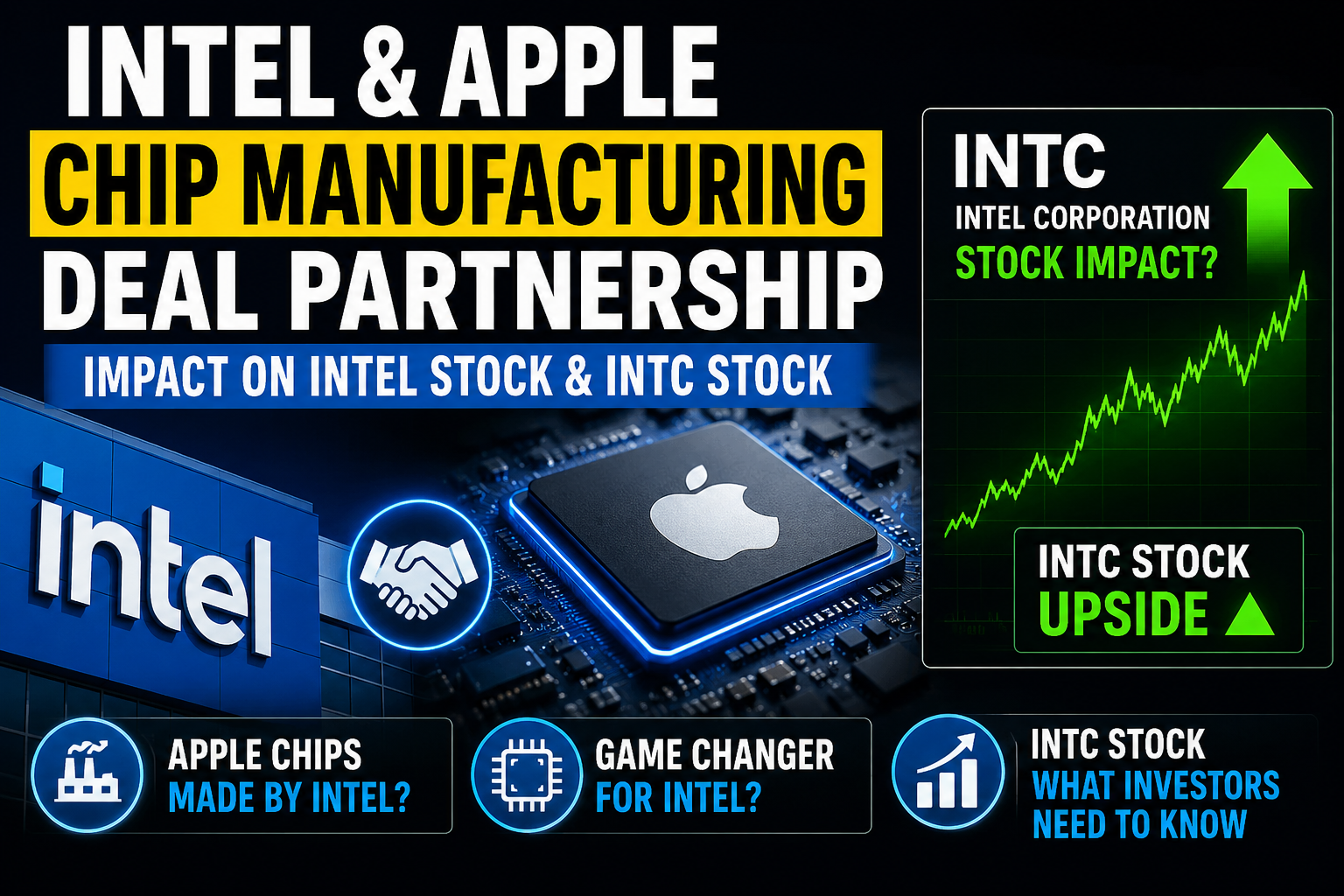
Explore the latest Intel–Apple developments, including their preliminary chip-making agreement, its impact on Intel (INTC) stock performance, and broader implications for the semiconductor industry.
Intel Apple partnership news has captured significant attention in the technology and financial sectors following reports of a preliminary agreement between the two companies for chip manufacturing.
This development marks a notable shift in the longstanding relationship between Apple and Intel, as the companies collaborate once again after Apple transitioned its Mac computers to in-house Apple Silicon chips several years ago. Recent reports indicate that Intel will manufacture some chips for Apple devices, with details still emerging about the specific products and timelines involved.
Background on Intel Apple Collaboration
The tech industry has closely followed the dynamics between Apple and Intel for decades. Intel previously supplied processors for Apple’s Mac lineup before Apple began designing its own ARM-based M-series chips, which offered superior performance and efficiency. This move reduced Apple’s dependence on external suppliers like Intel for its core computing needs.
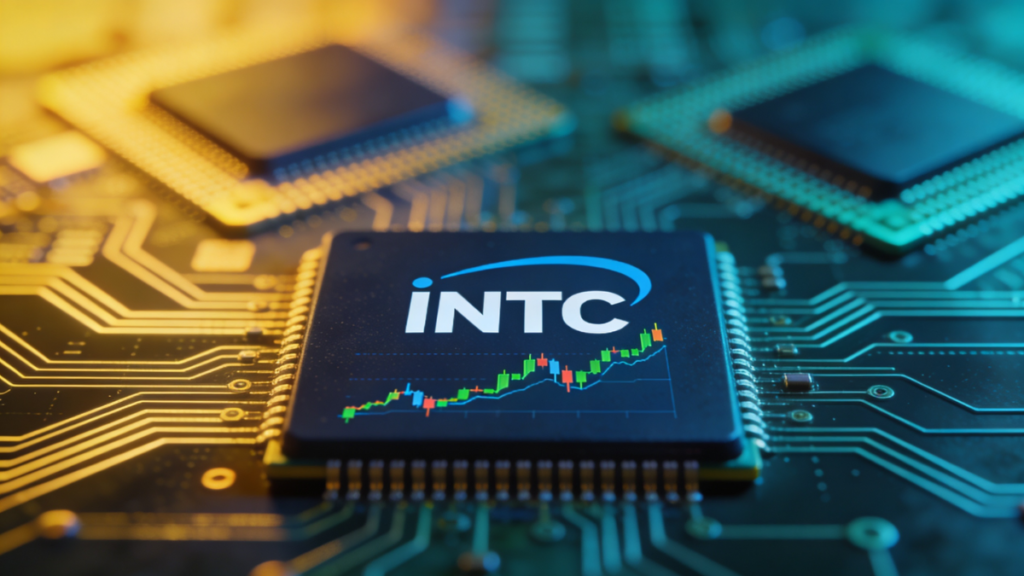
However, recent discussions between Intel and Apple have focused on Intel’s foundry business—its contract manufacturing services. Intel has invested heavily in expanding its manufacturing capabilities in the United States, with support from government initiatives aimed at strengthening domestic semiconductor production. The preliminary agreement reportedly stems from talks that lasted more than a year, culminating in a formal deal in recent months.
Analysts suggest this partnership could help Apple diversify its supply chain beyond its primary partner, Taiwan Semiconductor Manufacturing Company (TSMC). Geopolitical considerations and the desire for more U.S.-based production have played a role in these explorations, with Apple also engaging in discussions with other manufacturers like Samsung.
Impact on Intel Stock and INTC Stock Performance
The Intel Apple news triggered a strong positive reaction in the stock market. Intel (INTC) shares surged significantly, hitting new record highs in multiple trading sessions. Reports of the preliminary chip-making agreement led to gains of around 15% in a single day for INTC stock, marking one of its strongest performances in recent periods.
This rally was built on prior momentum, with Intel stock achieving multiple consecutive record highs. Investors viewed the potential Apple partnership as validation of Intel’s foundry strategy, which has faced challenges but received substantial backing through the U.S. CHIPS Act funding. The agreement positions Intel alongside other major customers in its foundry business, such as Microsoft, Amazon, and Tesla.
Market observers noted increased trading volume and heightened options activity around INTC stock following the reports. The broader semiconductor sector also benefited, with related stocks rising amid the positive sentiment surrounding Intel and Apple developments. As of the latest trading, INTC continued to show strength, reflecting ongoing investor interest in Intel news.
Details of the Preliminary Agreement
According to sources familiar with the matter, Intel will produce certain chips designed by Apple, potentially including lower-end M-series processors for devices like MacBook Air or iPad models. Production could leverage Intel’s advanced process nodes, such as its 18A technology, with initial shipments possibly starting in the coming years.
The deal remains in a preliminary stage, and neither company has released official statements confirming all specifics. Industry experts anticipate that any final implementation would involve rigorous testing and qualification processes typical for high-volume consumer electronics.
This Intel Apple collaboration aligns with broader industry trends toward supply chain resilience. With increasing demand for advanced semiconductors driven by artificial intelligence, data centers, and consumer devices, securing reliable manufacturing partners has become a priority for major tech firms.
Strategic Implications for Intel’s Foundry Business
Intel has positioned its foundry services as a key growth area. The company has poured billions into new fabrication plants (fabs) in the U.S. and Europe, aiming to compete directly with TSMC and Samsung. A high-profile customer like Apple could provide both revenue and credibility, encouraging other potential clients to consider Intel’s offerings.
Challenges remain, however. Intel’s foundry operations have reported losses in previous quarters as the company ramps up capacity and technology. Achieving consistent yields on advanced nodes and competing on cost and scale with established leaders will require continued execution. The Apple partnership, even if initially modest in volume (potentially 15-20 million units annually for certain products), represents a significant step forward.
For Apple, working with Intel offers potential benefits in terms of geographic diversification and support for U.S. manufacturing priorities. It does not signal a full reversal of the Apple Silicon strategy but rather a targeted use of external capacity for specific segments.
Market and Economic Context
The semiconductor industry operates in a complex global environment. Supply chain disruptions, trade tensions, and rapid technological advancement continue to shape strategies. The U.S. government’s emphasis on domestic chip production, including direct involvement in facilitating certain deals, underscores the strategic importance of companies like Intel.
Intel’s stock performance reflects not only the Apple news but also the company’s progress in its core CPU business, data center offerings, and AI-related products. Analysts continue to monitor how the foundry segment evolves and its contribution to overall profitability.
Broader market reactions included gains in related tech indices. The potential for increased U.S.-based production capacity could influence policy discussions and investment flows into the sector.
What Analysts Are Saying
Financial experts have offered varied perspectives on the long-term effects. Some highlight the upside for Intel’s valuation if the partnership expands, while others caution about the preliminary nature of the agreement and execution risks. INTC stock had already shown strength prior to the latest reports, but the Intel Apple catalyst accelerated the upward trajectory.
Investment considerations around Intel stock often include its dividend yield, exposure to cyclical semiconductor demand, and competitive positioning in AI and personal computing. The Apple deal adds a layer of strategic narrative that could attract both growth and value investors.
Future Outlook for Intel Apple Relations
Looking ahead, industry watchers expect more details to emerge regarding the scope of the manufacturing agreement. Timelines for production ramp-up, specific process technologies, and potential expansion to additional device categories will be key points of interest.
This development could also influence competitive dynamics. TSMC remains a dominant player, but increased diversification by customers like Apple may lead to shifts in market share over time. Intel’s success in delivering on this partnership will be closely scrutinized as a test case for its foundry ambitions.
In the wider context of Intel news, the company continues to navigate product roadmaps, including next-generation processors and AI accelerators. The synergy with Apple could open doors for deeper technical collaborations beyond basic manufacturing.
Broader Industry Ramifications
The semiconductor supply chain is evolving rapidly. As demand for chips grows across smartphones, computers, vehicles, and infrastructure, partnerships like the one between Intel and Apple highlight the importance of collaboration amid competition. U.S.-focused manufacturing efforts aim to mitigate risks associated with concentrated production in specific regions.
For investors tracking INTC stock, staying informed on quarterly earnings, foundry utilization rates, and customer wins will be essential. Apple, as one of the world’s most valuable companies, brings substantial scale that could meaningfully impact Intel’s financials if the relationship deepens.
Conclusion
The Intel Apple preliminary chip-making agreement represents a significant development in the tech landscape. It has already influenced stock performance, with INTC reaching new highs, and underscores ongoing efforts to strengthen semiconductor ecosystems. As more information becomes available, the full implications for both companies and the industry will become clearer.
This story continues to unfold, with potential ramifications for technology innovation, supply chain strategies, and market valuations. Observers across finance, tech, and policy sectors will monitor subsequent updates closely.